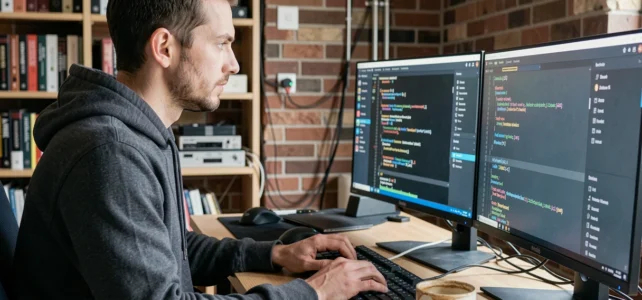
Consumer computing is undergoing a rapid transformation, driven by the emergence of generative artificial intelligence in everyday use and a tightening European regulatory framework on the cybersecurity of connected devices. According to the latest report from Arcep on the major trends in digital usage among the French, about one in two French people had already used a generative AI tool by 2025. This shift is redefining how enthusiasts approach their hardware, software, and technological monitoring.
Cyber Resilience Act: What the European Regulation Changes for Computer Hardware
Typical content on tech tips almost systematically ignores the regulatory aspect. The Cyber Resilience Act (CRA), adopted by the European Union, imposes new obligations on manufacturers of connected products marketed in the European market. Routers, NAS, webcams, smart home devices: all must meet cybersecurity requirements from their design stage, or they will no longer be allowed on the market.
For computer enthusiasts, the direct consequence is twofold. On one hand, security updates become a legal obligation for the manufacturer for the entire expected lifespan of the product. On the other hand, inexpensive devices without software support, common in certain categories (IP cameras, smart plugs), risk disappearing from European shelves.
The European Commission has published new guidelines to support the implementation of the CRA, signaling a gradual but concrete entry into force. For those assembling a PC or building a home network, this evolution is worth following closely: it should ultimately raise the default security level of available hardware. Field feedback still varies on the ability of small manufacturers to quickly comply with these requirements.

Generative AI and Everyday Computer Tools
Generative AI is no longer limited to spectacular demonstrations of chatbots. It is now directly integrated into operating systems, office suites, and photo editing software. Enthusiasts looking for information on the Geeks and The City website will find this topic addressed from several technical angles.
What concretely changes for the informed user: the command line, file searching, writing automation scripts, or sorting photos can now go through a natural language interface. An enthusiast who maintained PowerShell or Bash scripts to automate their backups can now ask an AI assistant to generate, correct, or optimize these scripts.
The available data does not yet allow for conclusions about the real impact of these tools on individual productivity. However, their massive adoption is documented by the Arcep report, which confirms that generative AI has become a major access point to online content and services for the general French public.
Limitations to Keep in Mind
The integration of AI into software raises questions about the confidentiality of processed data. Some tools send requests to remote servers, which can pose problems for sensitive personal or professional files. Checking whether processing is local or remote remains a reflex to acquire before activating these functions.
Messaging and Communication: The Decline of Conversational SMS
The digital usage reports for 2026 confirm a trend that computer enthusiasts have been observing for several years: SMS is now considered moribund for everyday conversation. Its use is concentrated on security notifications (two-factor authentication) and a few administrative exchanges.
Everyday conversation is migrating to three main channels:
- Instant messaging apps like WhatsApp and Messenger, which account for the majority of text and voice exchanges on mobile.
- The RCS (Rich Communication Services) protocol, which enhances the native messaging of Android smartphones with features similar to IP messaging (read receipts, sharing large files, group chats).
- Community platforms like Discord or Signal, adopted by technical profiles for their encryption or server management features.
For an enthusiast, this evolution has a practical impact: correctly configuring messaging applications and their privacy settings becomes as relevant as keeping antivirus software up to date. End-to-end encryption, managing conversation backups, and controlling shared metadata are all topics to master.

Technological Monitoring: How to Filter the Noise in Computing
The proliferation of information sources makes monitoring more complex than it was a few years ago. Between RSS feeds, specialized newsletters, Reddit threads, and AI-powered aggregators, the computer enthusiast faces a volume of content that is difficult to absorb.
Rather than multiplying subscriptions, a more effective approach is to prioritize sources according to three criteria:
- The frequency of publication (a blog that publishes a well-researched article weekly is often better than a site that publishes ten a day).
- The traceability of information (sources that cite their references, links to official documentation or changelogs, are more reliable).
- Thematic specialization (a site dedicated to networking or storage will provide more depth than a general portal on these subjects).
Generative AI tools can also be used to summarize long articles or extract technical points from a changelog, but they do not replace critical reading of a primary source. An automatic summary may omit a nuance or a condition of application that changes the meaning of information.
Cloud and Storage: A Permanent Trade-off
The cloud remains a fundamental topic for enthusiasts. Offers are regularly evolving, both in terms of pricing and data retention conditions. The question is no longer whether to use the cloud, but how to articulate local storage (NAS, external drives) and remote storage to balance accessibility, cost, and data control.
The requirements of the Cyber Resilience Act could indeed modify the public NAS offerings in the coming years by imposing stricter software support on manufacturers. A point to watch for anyone considering a hardware investment in the medium term.
The computing landscape of 2026 is characterized less by spectacular breaks than by a silent reconfiguration of usage, tools, and legal frameworks. For enthusiasts, the ability to cross technical monitoring and regulatory understanding becomes as valuable an asset as mastering a programming language or an operating system.