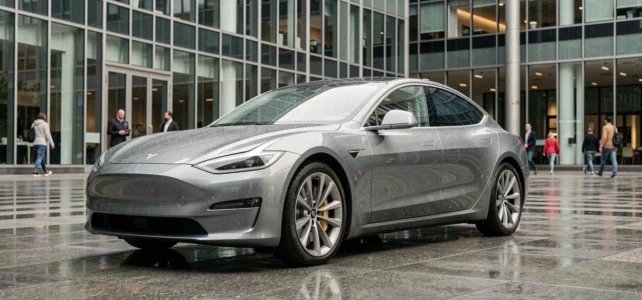
The year 2024 has reshuffled the cards in the automotive sector in Europe. With regulations that change the technical game, electric powertrains gaining maturity, and a Parisian auto show that has put France back in the spotlight, the usual reference points for buyers have shifted. Here are the most significant automotive trends for 2024 that are already impacting your choice of vehicle.
Euro 7 Standard: What This Regulation Means for New Cars
You may have heard of the Euro 6 standards, which have governed vehicle emissions for several years. In April 2024, the European Union took a significant step by adopting Regulation (EU) 2024/1257, dubbed Euro 7. This text replaces the Euro 6 framework and will apply to cars, vans, and trucks starting in 2027.
The novelty is not limited to exhaust gases. Euro 7 also regulates particles emitted from brake and tire wear. In other words, even an electric vehicle, which emits nothing from the exhaust, will have to comply with thresholds for these micro-pollutants. Manufacturers must also ensure the durability of pollution control systems over a longer period.
Testing procedures are also changing. They now cover a wider range of real-world situations: low temperatures, heavy loads, and intensive urban use. By exploring the automotive universe on Team Auto Passion, one can see how these technical developments are already reflected in the ranges offered by manufacturers.
For buyers, the direct consequence is a likely increase in costs for new thermal and hybrid models sold after 2027. The least efficient powertrains in real-world conditions may simply disappear from the catalog.

Automotive Circularity: The European Regulation on End-of-Life Vehicles
Less publicized than emission standards, another European text will transform the very design of cars. Regulation (EU) 2026/1738 imposes circularity requirements on manufacturers. The goal is for every new vehicle to integrate recycling and reuse constraints into its design from the outset.
Specifically, new cars will need to incorporate a minimum proportion of recycled plastic. Each vehicle will also be associated with a digital passport, a sort of technical identity card that will facilitate the disassembly and sorting of materials at the end of life.
Why does this matter starting in 2024? Because manufacturers are anticipating these obligations. The choices of materials, assembly, and design for models launched this year already take this future regulatory framework into account. A vehicle purchased in 2024 will be easier to recycle than its predecessor, even if the regulation does not come into effect for a few years.
Paris Motor Show 2024: The Models That Stood Out
The Paris Motor Show took place from October 14 to 20, 2024, at Porte de Versailles. This 90th edition confirmed the electric shift of French manufacturers while reserving a few surprises.
Alpine A390β and the Bet on Electric Sportiness
Alpine unveiled the A390β, a concept that heralds an electric sports sedan. The manufacturer is repositioning its range beyond the two-seater coupe. Alpine aims for the high-performance zero-emission sedan segment, a territory previously occupied by German or American brands.
Renault 4 E-Tech Electric: Betting on Nostalgia and Practicality
The Renault 4 is making a comeback in electric form. The design recalls the lines of the original 4L, but the platform is modern. Renault targets an urban and suburban audience looking for a compact, electric vehicle at a more accessible price than high-end SUVs.
Citroën: From the Restyled AMI to the C5 Aircross Concept
Citroën has made multiple presentations. The AMI has received a facelift, and a Buggy Vision version has been unveiled. The C3 Aircross, the restyled C4, and a concept for a future C5 Aircross completed the lineup. Citroën is betting on the affordability of electric vehicles, from urban quadricycles to family SUVs.
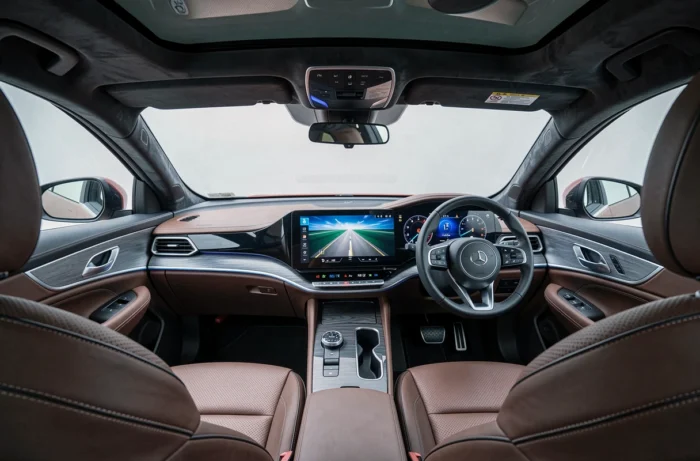
Superethanol E85 and Hybrids: Alternatives Making Progress in 2024
Electric vehicles dominate the announcements, but other powertrains are gaining ground. Superethanol E85, cheaper than regular gasoline, is attracting more and more drivers. Several French regions are offering subsidies for the installation of ethanol conversion kits, which is accelerating adoption.
Are you hesitating between a hybrid vehicle and an E85-compatible model? Here are the criteria to compare:
- Cost per kilometer: E85 remains one of the cheapest fuels at the pump, while hybrids reduce overall consumption without changing fuel
- Distribution network: charging stations are multiplying, but stations offering E85 now cover a large part of the territory
- Resale value: plug-in hybrids retain a good resale value, while the resale of a vehicle equipped with an E85 kit depends on the approval of the device
- Regulatory impact: a plug-in hybrid often benefits from the Crit’Air 1 sticker, while a gasoline vehicle converted to E85 remains classified according to its year of registration
The choice depends on the driving profile. For long highway trips, a conventional hybrid remains efficient. In mixed use with frequent refueling, E85 offers an immediate financial advantage.
What These 2024 Automotive Trends Mean for Buyers
The year 2024 marks a regulatory as well as technological turning point. Euro 7 pushes manufacturers to rethink their thermal engines. The circularity regulation requires thinking about the vehicle from its manufacture to its disassembly. The Paris Motor Show demonstrated that French brands are taking these constraints as a lever to renew their ranges.
For a buyer, a useful reflex is to check the homologation date of the desired model and its compatibility with future standards. A Euro 7 compliant vehicle will retain its value longer than a model at the end of its regulatory cycle. The automotive trends of 2024 are not just announcements: they are reshaping the market for the coming decade.