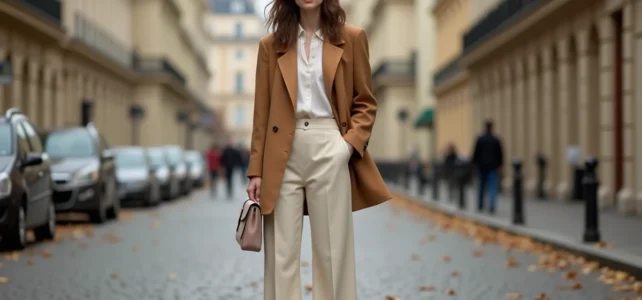
This season’s fashion is not just a list of pieces to buy. It is based on a shift in logic: style is now built around an accessory or a color, with the clothing coming in to complement this foundation. This reversal, confirmed by search data on platforms like Pinterest Predicts, redefines how an outfit is composed on a daily basis.
Accessory-led dressing: when the accessory dictates the silhouette
The term accessory-led dressing refers to an approach where the silhouette is built around a central accessory rather than a piece of clothing. Specifically, the starting point of an outfit becomes a statement brooch, a structured belt, or a bold piece of jewelry, rather than a dress or trousers.
This logic changes the hierarchy of the wardrobe. A simple blouse and neutral trousers become the backdrop for a pair of sculptural earrings or a bag with a strong shape. The clothing takes a back seat, reducing the pressure to refresh the wardrobe.
Jewelry is also experiencing strong growth in 2026, driven by the idea of jewelry as a long-term investment and a tool for personal expression. Choosing a standout accessory before putting together the rest of the outfit allows for a unique style without multiplying purchases. To explore fashion on the YBA site, this approach provides a useful framework for identifying the pieces that structure a look.
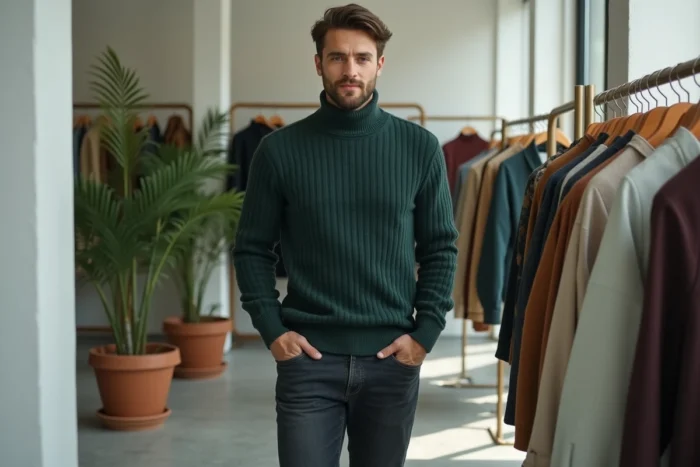
Trendy women’s colors: intensity versus natural tones
This season’s palettes are divided into two clear camps. On one side, saturated shades (bright orange, yellow, vivid pink, sky blue) appear on the runways of Milan and Paris, worn by houses like Loewe and Miu Miu. On the other side, earthy and organic tones (olive green, beige, ecru) ground the silhouettes in a deliberate sobriety.
The choice of color precedes that of the cut. A flowing long dress in bright yellow tells a different story than in natural linen, even if the silhouette is the same. Color acts as a standalone accessory.
Three principles help to arbitrate between these two registers:
- One intense splash of color per outfit is enough to create a focal point. Pairing two saturated pieces creates a costume effect that ages quickly.
- Natural tones work better on structured pieces (wide trousers, short jackets), as they allow the cut to speak.
- Mixing a colored piece and a neutral piece in the same material (linen on linen, cotton on cotton) provides a textile coherence that compensates for the chromatic contrast.
Flowing dress and wide trousers: two cuts that absorb all trends
Rather than listing ten pieces, two silhouettes summarize the direction taken by the spring-summer 2026 collections: the flowing long dress and the structured wide trousers.
The flowing long dress, seen at Saint Laurent and Tom Ford, fits into the poetcore trend. Its ample drape allows for varying the look solely through accessories: flat with minimalist sandals, bold with a thin belt and statement jewelry. It absorbs bright colors as well as neutrals without losing its line.
The structured wide trousers offer the same versatility. With a defined waist and loose fit, they create a stable base onto which the rest can be added. Paired with a simple t-shirt and a brooch, it produces a look that holds effortlessly.
These two pieces share a common trait: they do not depend on a print or pattern to exist. Their interest comes from the cut and the fabric, making them compatible with the accessory-led logic described above.
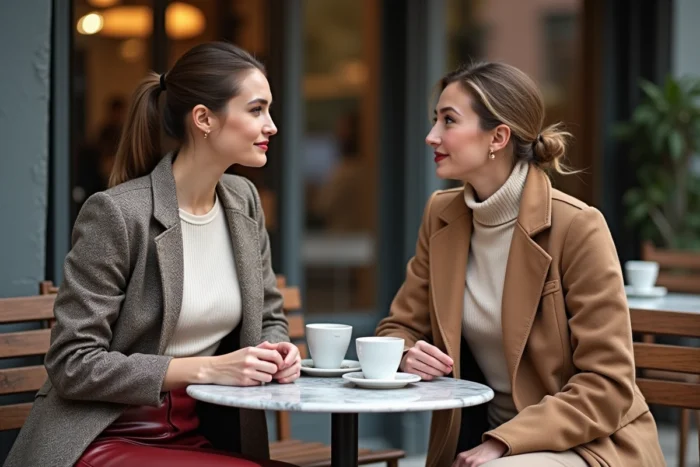
Fashion trends validated by search data
This season’s trends do not solely emerge from the runways. Data platforms (Pinterest Predicts, SEO tools, shopping queries) now serve as validation tools. A trend spotted on a runway only enters the radar if search volumes confirm a real public interest.
This data-driven filter explains why some proposals seen on the runway disappear within weeks while others establish themselves. The poetcore and accessory-led dressing have been confirmed by mid-2026 data, giving them a lifespan beyond a mere runway effect.
To create a sustainable personal style, this framework changes the game. Following a trend validated by actual searches reduces the risk of investing in an obsolete piece come fall. Coordinated sets, for example, continue to generate a strong volume of queries, indicating that their adoption extends beyond the circle of insiders.
Building an outfit with the accessory-color-cut method
Rather than a generic organizational tip, here is the concrete order that emerges from this season’s trends:
- First, choose the standout accessory (sculptural jewelry, defined belt, structured bag). It sets the tone.
- Next, determine the dominant color: intense if the accessory is discreet, neutral if the accessory already carries the look.
- Finally, select the cut (flowing dress or wide trousers) based on the context. The cut serves as a canvas, not the star.
This sequence reverses the usual logic that starts with clothing and ends with details. It produces more coherent silhouettes because each element has a defined role before being assembled.
This season’s fashion rewards precision over accumulation. A well-chosen accessory, a bold color, and a flowing cut are enough to create a recognizable style without refreshing an entire wardrobe.