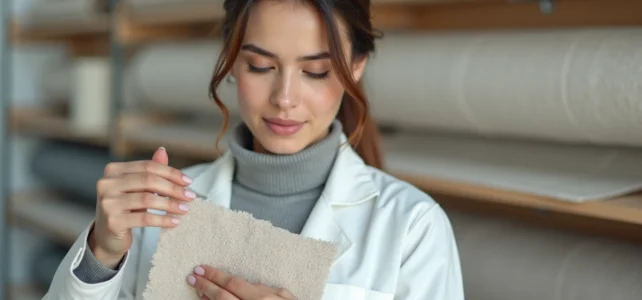
A cotton t-shirt, a polyester sail, a non-woven medical bandage: all these items share a common point. They are made from textiles. However, the word covers very different technical realities, and the industry is evolving rapidly due to new fibers, environmental regulations, and a shift towards circularity.
Understanding the definition and characteristics of modern textiles means grasping how a simple assembly of fibers can meet such varied uses as clothing, furniture, or the automotive industry.
Fiber, yarn, fabric: the three levels of textiles
Textiles start with the fiber. Think of a strand of cotton pulled from its capsule or a filament of polyester coming from an industrial process. Alone, this fiber is useless. It must first be transformed into yarn through twisting or extrusion.
The yarn becomes the building block. Depending on the technique used, it gives rise to a woven fabric (the yarns cross on a loom), knitted (the yarns form interlaced loops), or non-woven (the fibers are bonded by heat, pressure, or chemical agents, without going through the stage of classic yarn).
This distinction matters in everyday life. A fabric in plain weave, like a linen shirt, offers a stable and less stretchy surface. A knit, like a wool sweater, stretches in multiple directions. A non-woven, like a coffee filter or a wipe, prioritizes lightness and low production cost. Each textile structure meets a specific need, and the definition and characteristics of textiles vary according to this basic architecture.
Natural fibers and synthetic fibers: what really changes
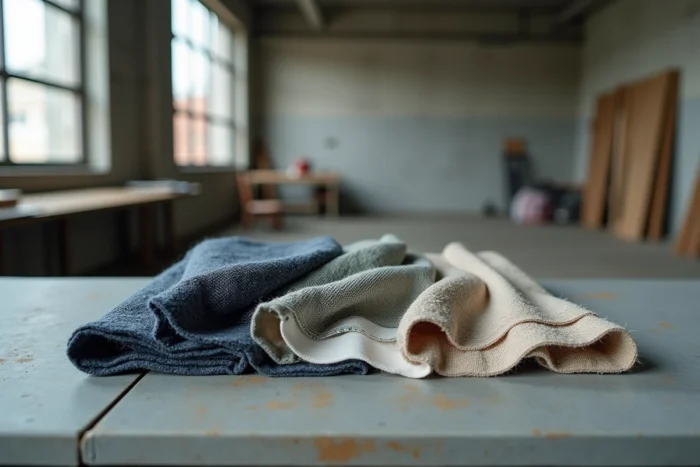
You may have noticed that linen pants dry faster than thick cotton jeans, even though both are plant fibers? The raw material alone is not enough to predict the behavior of a textile. The structure of the fiber, its diameter, its length, and the treatments it undergoes are just as important as its origin.
Natural fibers: plant and animal
Cotton remains the most used plant fiber in clothing. Linen and hemp, grown in France and Europe, offer good mechanical resistance and absorb moisture. Wool and silk, animal fibers, provide thermal properties or a feel that plant fibers do not easily replicate.
Natural fibers absorb water but wrinkle faster. This is a compromise to be aware of before choosing a fabric for clothing or domestic use.
Synthetic and artificial fibers
Polyester, polyamide (nylon), and elastane are synthetic fibers derived from petrochemicals. They provide elasticity, abrasion resistance, and quick drying. Artificial fibers like viscose, modal, or lyocell come from cellulose (wood pulp) that is chemically transformed. Lyocell, for example, uses a solvent recycled in a nearly closed loop.
- Polyester dominates global textile fiber production due to its low cost and versatility.
- Lyocell (marketed under the brand Tencel) combines softness, absorbency, and a manufacturing process with lower environmental impact.
- Elastane, added in small proportions, gives fabrics their stretchability (stretch jeans, sportswear).
A modern textile often blends several fibers to combine the advantages of each. A cotton-polyester t-shirt retains the comfort of cotton while drying faster thanks to polyester.
Manufacturing techniques and functional properties
The fiber and yarn only determine part of the result. Manufacturing techniques and finishing treatments transform a basic fabric into a technical product.
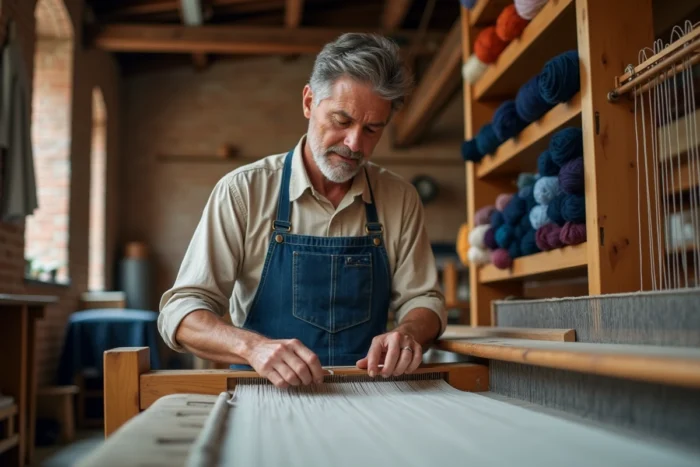
Twill weaving, recognizable by its diagonals, gives denim its strength. Circular knitting allows for the production of seamless mesh tubes, used in underwear and sportswear. Non-wovens, obtained through calendering or needling, are used in medical (masks, gowns), construction (geotextiles), and automotive (interior linings).
Finishing treatments radically modify the behavior of a textile. Cotton can become water-repellent after coating, fire-retardant through chemical impregnation, or wrinkle-free thanks to a cross-linking treatment. These finishes explain why two seemingly identical cotton shirts can behave very differently in washing or under rain.
Environmental labeling and circular textiles: the framework taking shape
Modern textiles are no longer defined solely by their physical properties. Regulatory pressure is pushing manufacturers to integrate environmental impact from the design stage.
In France, ADEME presented in June 2026 an evolution of the method for calculating environmental labeling for textiles. An official consultation was open until June 30, 2026, with possible regulatory changes by the end of 2026 and a potentially modified framework in the second half of 2027. Labeling remains voluntary for now, but it could become a differentiating criterion in the market.
The model of circular textiles is gaining ground in Europe. According to a study conducted by KPMG and the Circular Fashion Federation, reuse, repair, recycling, and reinvention of textile products are experiencing unprecedented acceleration on the continent. Textiles are gradually transitioning from disposable consumer goods to reusable assets.
- The anti-fast fashion law adopted in France aims to reduce the environmental impact of textile overproduction.
- Fiber-to-fiber recycling (transforming an old garment into new fiber) remains a technical challenge, especially for cotton-polyester blends.
- Brands are increasingly incorporating recycled polyester and organic cotton into their collections, in response to consumer demand.
Textile characteristics: the concrete criteria to remember
When choosing a textile for clothing, curtains, or technical use, several properties deserve your attention.
The fiber composition determines the feel, breathability, and maintenance. A 100% linen textile wrinkles but regulates temperature well. A polyester-elastane blend resists deformation but retains more odors.
The grammage (weight per square meter) indicates thickness and robustness. A lightweight fabric is suitable for a summer shirt, while a denser grammage is appropriate for a coat or bag. The weave (plain, twill, satin) influences flexibility and visual appearance as much as the fiber itself.
Pilling resistance, dye fastness, and wash behavior depend as much on finishes as on the material. Reading the composition label is not always enough: two cotton fabrics with the same grammage can age very differently depending on their treatment.
Modern textiles sit at the intersection of fiber chemistry, process engineering, and a regulatory framework under construction. The next step, with environmental labeling and the development of fiber-to-fiber recycling, could redefine the quality criteria that consumers and professionals use to evaluate a textile product.