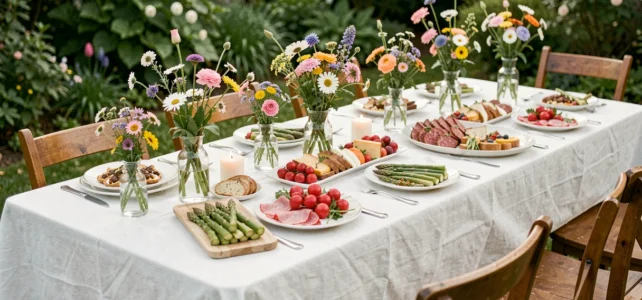
Veal remains the protein marker of the Pentecost meal in France, but building a complete menu around this single meat limits the possibilities for pairings and textures. A successful Pentecost menu relies on three decisions: the choice of the main dish, the acid-fat balance of seasonal sides, and the management of pre-cooking to free up the day itself.
Pentecost Veal: choosing the right cut for the right table format
The veal shoulder and rack are suitable for tables of six to eight guests, with an oven cooking time that can be controlled. The shoulder roast, whether barded or not, can withstand slow cooking at 130 °C followed by a long rest, allowing it to be prepared late in the morning and served pink at the table without timing stress.
For larger tables, we recommend the rolled shoulder. Its collagen content forgives cooking deviations and produces a naturally thickened meat juice. The shoulder also accepts marinades with fresh herbs (tarragon, chervil, sage) that enhance the springtime character of the meal.
Braised brisket constitutes an underutilized alternative. This gelatinous cut, cooked the day before in a vegetable broth, can be reheated on the day without losing texture. It is a relevant choice when you want to focus your energy on the starter and dessert rather than the main course. You can also explore the Pentecost menu on the L’Entracte Gourmand website to compare approaches to composition around veal and other seasonal meats.
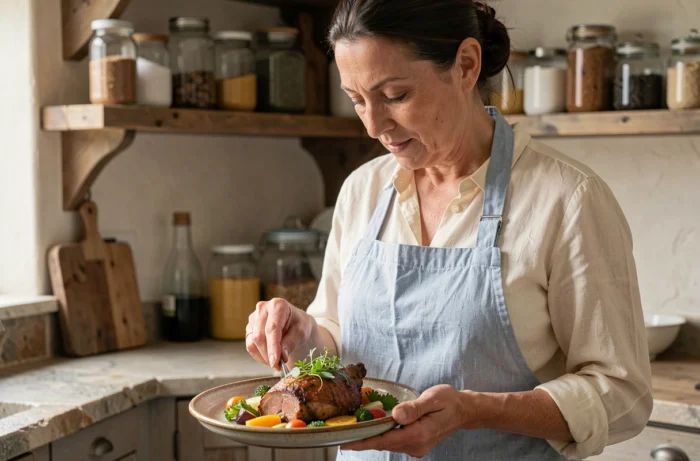
Asparagus, peas, and herbs: composing seasonal sides
Green asparagus and fresh peas form the vegetable base of the Pentecost menu. Their peak season coincides exactly with the extended weekend period, ensuring products at the right maturity and a reasonable cost.
White asparagus requires careful peeling and cooking in salted water for twelve to fifteen minutes depending on size. We prefer them warm, topped with a gribiche sauce made with capers, chervil, and tarragon. This type of acidic sauce balances the richness of the roasted veal served afterward.
Fresh peas, shelled in the morning, are cooked English-style for three to four minutes to retain their crunch and color. A quick toss in foamy butter with fresh mint leaves is sufficient. This preparation does not tolerate reheating: it should be done at the last moment.
Root vegetables and gratins for large tables
For meals with more than ten guests, a vegetable gratin prepared the day before simplifies service. The classic gratin dauphinois works, but a new turnip gratin with cream and thyme pairs better with veal and adds a lighter note.
Honey-glazed carrots with cumin complete the flavor profile. They reheat easily and add a sweet-spicy touch that breaks the monotony of a side that is all sweetness.
Complete Pentecost Menu: starter, main course, dessert, and time management
A balanced Pentecost menu follows a progression of flavors: fresh and acidic for the starter, rich and umami for the main course, sweet and light for dessert. Here’s a menu structure that respects this logic while allowing for advance preparation:
- Starter: fine tart with green asparagus and fresh goat cheese. The puff pastry can be prepared or bought the day before, and the filling can be assembled in twenty minutes. Serve warm with a few arugula sprouts.
- Main course: veal roast with jus, mint peas, and turnip gratin. The gratin is cooked the day before. The roast goes into the oven two hours before serving. The peas are prepared during the meat’s resting time.
- Dessert: strawberry tart on vanilla pastry cream. The tart shell and cream are made the day before. The strawberries are arranged one hour before serving to prevent them from soaking the crust.
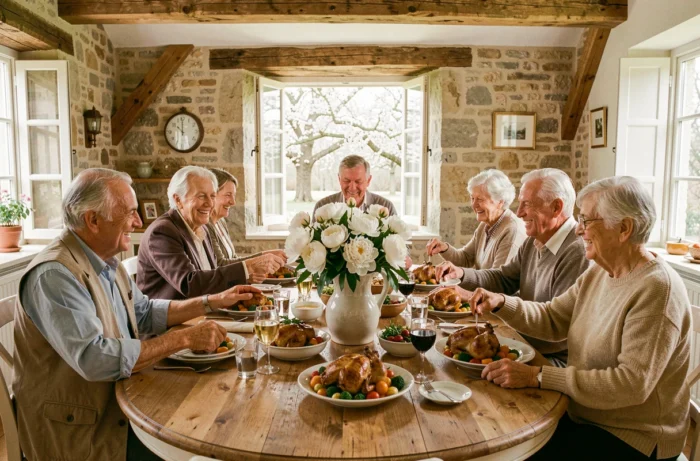
Two-day preparation timeline
The day before, focus on long cooking and cold preparations: gratin, pastry cream, tart shell, and possibly braising the brisket if you chose that option. On the morning of the meal, take the veal out of the refrigerator one hour before cooking to return it to room temperature. Shell the peas, wash the herbs, and prepare the gribiche sauce if it’s not made yet.
The critical window is between the moment the roast comes out of the oven and the serving of the starter. During the twenty minutes of resting the meat, cook the peas and reheat the gratin. This sequencing avoids bottlenecks in the kitchen and ensures that each element arrives at the right temperature.
Alternatives to veal: free-range chicken and vegetarian options for Pentecost
Consumption of lamb and veal during spring festivities has been declining for several years. Poultry, particularly chicken, has become the most consumed meat in France, with notable growth in recent years. A whole roasted free-range chicken, stuffed with herbs and candied lemon, offers an accessible and universally appreciated festive dish.
Roast chicken has a logistical advantage: its cooking time is faster than that of veal, and it carves easily at the table. A sauce made with deglazed juices, a splash of sherry vinegar, and a spoonful of whole grain mustard gives it a festive character without complication.
Vegetarian option for a mixed table
For guests who do not eat meat, a seasonal vegetable quiche (asparagus, zucchini, spring onions) replaces the main dish without creating a parallel menu. The quiche can be fully prepared the day before and reheated for fifteen minutes in the oven before serving, simplifying the management of a table with different dietary preferences.
The Pentecost menu benefits from remaining simple in its structure and precise in its product choices. Three well-executed dishes with seasonal vegetables and properly cooked meat are enough to mark the meal. The rest is about the time spent at the table, not the number of stacked recipes.